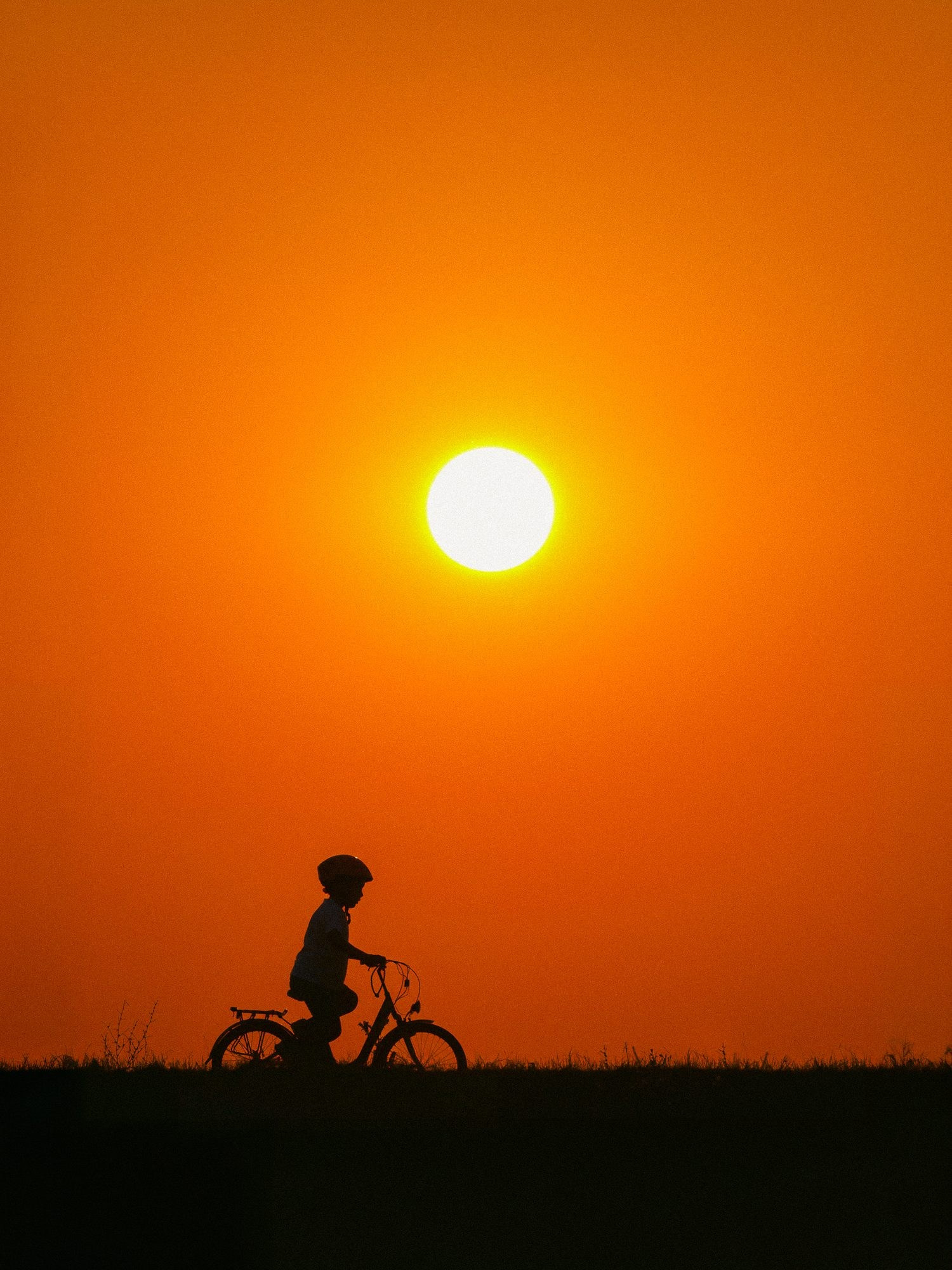
The number on your lens, or the 0.5x to 8x on your iPhone, decides how wide the view is. It also changes how big the background looks compared with your subject, which is how photographers get giant suns and towering mountains.
The numbers under your viewfinder (0.5x, 1x, 2x, 5x) are focal lengths in disguise. Each one changes how much you see and, just as much, how near and far things look. This chapter shows what each button really is on your iPhone, Samsung or Pixel, and which one to use when.
Short answer
Focal length decides how wide the view is. Under 35 mm is wide, around 50 mm looks natural, 85 mm and up is telephoto. The 0.5x, 1x and 2x on a phone work the same way. For portraits use 50 to 85 mm (2x on iPhone) and step back a little.
Short answer
Your phone has two to four real cameras: 0.5x ultra wide, 1x main, and on most models a telephoto at 3x, 4x or 5x. The 2x button is a clean crop of the main camera. Tap those buttons instead of pinching: anything in between is digital zoom. Use 1x in low light, 0.5x for big spaces, and the longest real lens for faces and far-away detail.
Interactive
Zoom the view
Stand in one place and change the focal length. Small numbers see wide, big numbers see narrow and close.
Focal lengths are full-frame equivalent: what the same view needs on a full-frame camera.
Short focal lengths fit more in; long ones pick out a detail. Choose the frame you want, then the number.
On a phone, 0.5x is about 13 mm, 1x about 24 mm, 2x about 48 mm and 5x about 120 mm. Same idea, different labels.
Your phone
What each lens button really is
Button
Like a camera at
Real lens?
0.5x
13 mm
Yes: ultra wide camera. Also does macro on Pro models.
1x
24 mm
Yes: the main camera, the best one in low light.
2x
48 mm
A clean crop of the 48 MP main sensor. Nearly as good as a real lens.
4x
100 mm
Yes on Pro models: the telephoto camera.
8x
200 mm
A crop of the telephoto (Pro models).
Values for iPhone 17 Pro and 18 Pro. Standard iPhones have 0.5x, 1x and 2x. Tap 1x again to step to 1.2x and 1.5x, the classic 28 mm and 35 mm framings.
Button
Like a camera at
Real lens?
0.6x
about 13 mm
Yes: ultra wide camera, also used for close-ups.
1x
about 24 mm
Yes: the main camera (200 MP on the Ultra).
2x
about 48 mm
A crop of the main sensor, "optical quality".
3x
about 70 mm
Yes: a small telephoto camera.
5x
about 115 mm
Yes on the Ultra: the 50 MP periscope. The best Samsung lens for portraits.
10x
about 230 mm
A crop of the 5x camera (Ultra).
Values for the Galaxy S26 Ultra. The S26 and S26+ have 0.6x, 1x, 2x and 3x.
Button
Like a camera at
Real lens?
0.5x
about 12 mm
Yes: ultra wide, with Macro Focus.
1x
about 24 mm
Yes: the 50 MP main camera.
2x
about 48 mm
A crop of the main sensor, very clean.
5x
about 115 mm
Yes: the telephoto camera.
10x
about 230 mm
A crop of the 5x camera, still sharp.
Values for Pixel 10 Pro and 11 Pro. The standard Pixel 10 and 11 also have a 5x telephoto, with a smaller sensor.
Tap the buttons, don't pinch. The buttons are real lenses or clean crops; the gaps between them are digital zoom.
Interactive · real photos
Compression: the giant sun trick
Keep your subject the same size by walking back as you zoom in. The subject stays the same, but the background grows. That is "lens compression", and it is really about distance.
Big sun, small rider. Shot from far away with a long lens. For a shot like this: 200 to 600 mm, f/8, fast shutterOn a phone: your longest lens from far away; a camera does this better
Plane across the moon. Only a long lens makes the moon this big. For a shot like this: 200 mm or longer, tripod, patienceOn a phone: your longest lens, braced, and a little crop
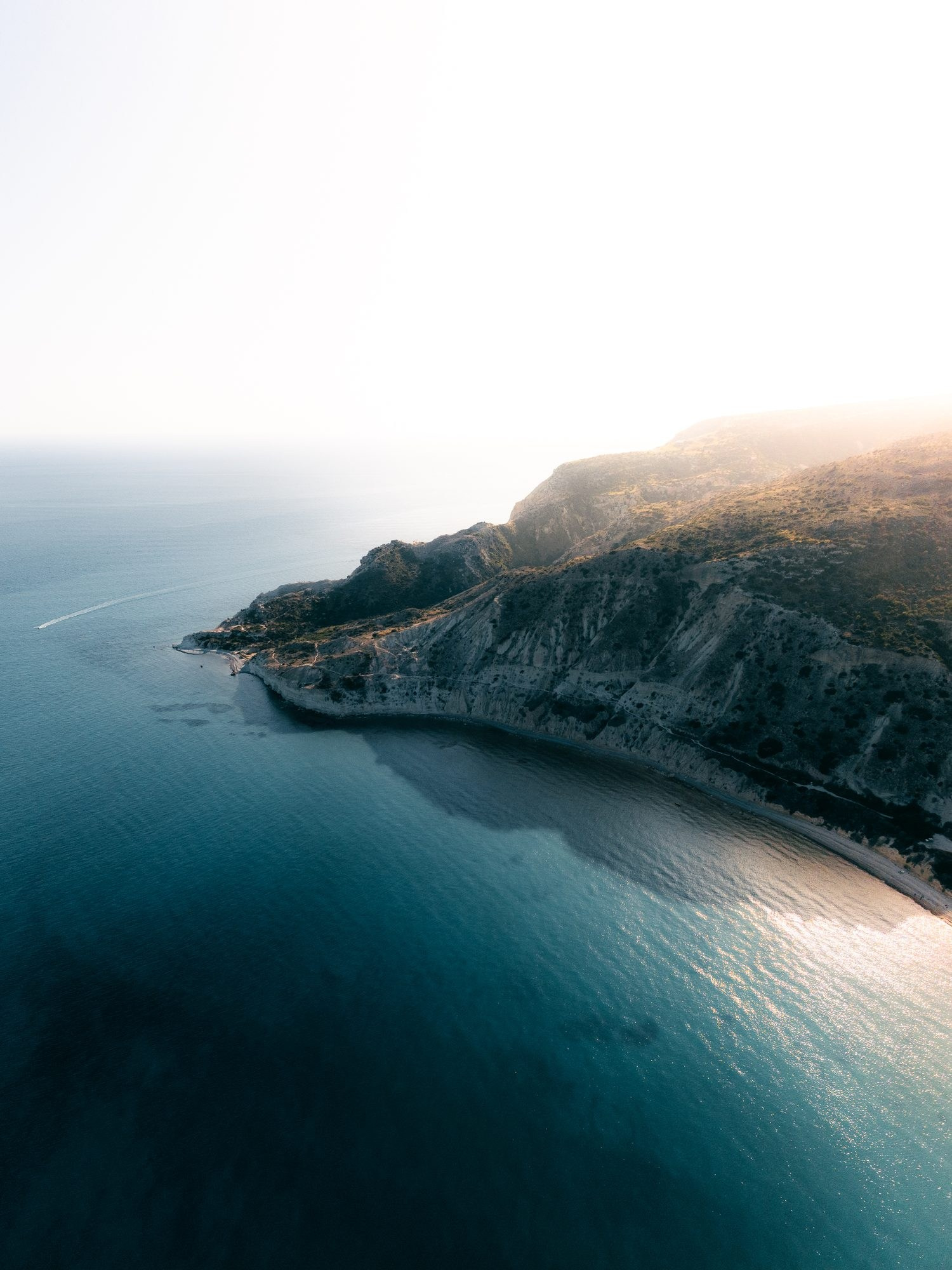
Wide and deep. A wide lens takes in the whole coastline. For a shot like this: 16 to 24 mm, f/8On a phone: 0.5x or 1x, horizon level
Compression comes from distance, not the lens. A long lens just lets you crop in from far away.
Your longest phone lens does the giant-sun trick too. Step far back and zoom to 4x or 5x.
In depth
Perspective: why faces look wrong on wide lenses
Perspective, how big near things look compared with far things, depends only on where you stand. The lens decides how much of that view you include. When you use a wide-angle lens close to someone's face, the nose is much nearer to you than the ears, so it looks much bigger. Step back to 2 or 3 metres and use 85 mm, and the difference shrinks: faces look natural and flattering.
The same physics is a tool for landscapes. A wide lens close to a rock or flower makes it loom large in front of distant mountains, giving depth. A long lens from far away makes the mountains stack up behind each other, looking closer together and more dramatic.
Zoom with your feet, then with the lens
"Zoom with your feet" is good advice with one addition: first decide where you need to stand for the relationship you want between subject and background, then use the zoom to frame it. Standing still and turning the zoom ring only changes the crop.
The iPhone lenses are separate camerasYour phone's lenses are separate cameras
The 0.5x, 1x and telephoto options are different cameras with different sensors. Values in between (such as 1.5x or 3x on some models) are digital crops of the nearest camera, or crops from a high-resolution sensor. The main 1x camera usually has the best image quality, especially in low light.
Cheat table
Which button for which photo
Subject
Button
Why
Big landscapes, rooms, architecture
0.5x
Fits it all in. Put something interesting close to the lens.
Street, travel, everyday
1x
Natural view, the best quality, the best at night.
Food, half-body portraits
2x
Less distortion than 1x, still sharp.
Faces, details, layered mountains
3x to 5x
Flattering proportions and a softer background.
The moon, birds, a far-away sign
5x to 10x
Reach. Hold very still or lean on something.
Anything in dim light
1x
The other lenses gather much less light. Crop later instead.
0.5x to fit it in, 1x for most things and all night shots, 3x to 5x for faces and details.
In depth
Getting the ultra wide right
The 0.5x lens is the most fun and the easiest to get wrong. It exaggerates everything near the lens and shrinks everything far away. That makes some photos and ruins others.
Get close to something. A rock, a flower, a doorway. Without a strong foreground, 0.5x photos look empty.
Keep the phone level. Tilt it up at a building and the walls lean inwards dramatically. Turn on the level (chapter 11) and hold it straight.
Keep people in the middle. Near the edges, faces and bodies stretch. The phone corrects some of it, not all.
Avoid it at night. The ultra wide gathers much less light than 1x and gets noisy fast.
Buying advice
Which lens to buy second
If you mostly shoot
Buy
Why
People, portraits, family indoors
50 mm f/1.8 (APS-C or full frame)
Cheap, light, blurs backgrounds, works in low light
Travel and street
A 24 to 35 mm equivalent prime, or a travel zoom
Wide enough for streets and rooms, small enough to carry all day
Landscapes and architecture
An ultra-wide zoom (about 10-20 mm on APS-C)
Big skies, interiors, foreground drama
Wildlife, sport, kids' matches
A 70-300 mm or similar telephoto zoom
Reach, and blurred backgrounds from a distance
Food and small things
A macro lens, or a 50 mm with close focus
Fills the frame with small subjects
If you are unsure, the 50 mm f/1.8 is the best-value second lens in every system.
Lens types
Which focal length for what
Range
Name
Good for
Watch out for
14 to 24 mm
Ultra wide / wide
Landscapes, interiors, architecture, big skies
Faces close to the edge look stretched
28 to 35 mm
Wide standard
Street, travel, documentary, everyday
You need to get close
40 to 60 mm
Standard
"Like the eye sees": everything
Can feel plain: compose with care
70 to 135 mm
Short telephoto
Portraits, details, layered landscapes
Needs faster shutter speeds
200 mm +
Telephoto
Wildlife, sport, the moon, compression
Heavy, shake shows: use stabilisation
Zoom with your feet first. Changing distance changes perspective; zooming only changes framing. Walk closer for impact, step back and zoom in for flattering portraits.
Most everyday photography lives between 24 and 85 mm. Learn that range before buying extremes.
Calculator
Crop factor: why 50 mm is not always 50 mm
APS-C sensors are smaller, so they see a tighter view through the same lens. Multiply by the crop factor to compare with full frame.
Looks like on full frame
-
On APS-C, multiply by 1.5 (1.6 on Canon) to compare with full-frame numbers you read online.
iPhone
What 0.5x to 8x really are
Button
Equivalent
Real lens?
0.5x
13 mm
Yes: ultra wide camera
1x
24 mm
Yes: main camera, the best one
2x
48 mm
Centre crop of the 48MP main sensor, "optical quality"
4x
100 mm
Yes on Pro models: telephoto camera
8x
200 mm
Centre crop of the telephoto (Pro models)
Values for iPhone 18 Pro. Anything between the buttons, or beyond 8x, is digital zoom: it just enlarges pixels. Tap the buttons, don't pinch.
Avoid these
Focal length mistakes
Close-up portraits at 0.5x or 24 mm
Big noses, small ears. Fix: 50 to 85 mm (2x on iPhone) from a couple of metres.
Always zooming in from where you stand
You get a flat, distant photo. Fix: walk closer and use a wider setting.
Tilting a wide lens up at buildings
Walls lean inwards. Fix: keep the camera level, step back, or correct it in editing.
Putting people at the edge of a wide frame
Edges stretch them sideways. Fix: keep people nearer the centre with ultra-wides.
Using digital zoom on a phone
Beyond the real telephoto, it is just a crop. Fix: step closer or crop later, when you can choose.
Avoid these
Lens mistakes on a phone
Pinching to zoom
Between the buttons the phone is just enlarging pixels. Fix: tap 0.5x, 1x, 2x or 5x.
Selfie-distance portraits at 1x
Close and wide makes noses big. Fix: step back and use 2x or longer.
Zooming at night
The telephoto is darker, so the phone may quietly crop the main camera instead. Fix: 1x, then crop later.
Empty 0.5x shots
A wide view with nothing close looks like a postcard of nothing. Fix: put a foreground right in front of the lens.
Never zooming in
Many people never touch 3x or 5x. Fix: for one day, take every photo with the longest lens. You will see differently.
Myth or fact?
Test what you think you know
A telephoto lens flattens faces by itself.
Distance does it. The long lens simply lets you stand further away and still fill the frame.
A 50 mm lens on APS-C frames like about 75 to 80 mm on full frame.
The smaller sensor crops the image by about 1.5 times (1.6 on Canon). The lens itself does not change.
A 10x zoom is ten times better than a 3x zoom.
Big zoom ranges usually mean darker apertures and softer corners. Range is convenience, not quality.
Myth or fact?
Test what you think you know
100x zoom means your phone has a 100x lens.
Beyond the longest real lens (usually 4x or 5x) and its clean crop, the rest is digital zoom with AI sharpening. Fun, but not a lens.
The 2x button can be almost as good as a real 2x lens.
It crops the centre of a 48 to 200 MP sensor, so there are still plenty of pixels for a sharp 12 MP photo in good light.
The 1x camera is the best one in low light.
It has the biggest sensor and the widest opening on almost every phone.
The story behind it
Why 50 mm became "normal"
1925
A small camera built for cinema film
Oskar Barnack, an engineer at Leitz in Germany, built a small camera that used 35 mm cinema film sideways, giving a 36 x 24 mm frame. The first production model, the Leica I, went on sale in 1925 with a 50 mm lens. The combination gave a view close to what feels natural to the eye, and that frame size became today's full frame.
That is why 50 mm is still called the "normal" lens, and why focal lengths are compared to full frame even on cameras that are not.
Try this now
One subject, three distances
Days 11 and 12 of the 30-day plan.
Photograph a friend at your widest setting from 50 cm.
Step back and photograph them at 50 mm so they fill the same space.
Step back again and do it at your longest setting (2x or more).
Compare the faces and the backgrounds.
Try this now
One spot, every lens
Ten minutes, anywhere with a view.
Stand in one place. Take the same scene with every lens button your phone has.
Then walk up close to one detail and shoot it at 0.5x, and walk back and shoot the same detail at your longest lens.
Compare the last two. Same subject, a completely different relationship with the background.
FAQ
Focal length questions people ask
What focal length is best for portraits?
50 to 85 mm on full frame, about 35 to 56 mm on APS-C, or 2x to 4x on an iPhone. Stand 1.5 to 3 metres away.
What does 35 mm equivalent mean?
The focal length that would give the same view on a full-frame camera. It lets you compare lenses across different sensor sizes.
Is a zoom or a prime lens better for beginners?
Start with the kit zoom to learn which focal lengths you like, then add a bright prime at that length.
What focal length are the iPhone cameras?
Roughly 13 mm (0.5x), 24 to 26 mm (1x), and 48 mm or longer for the 2x and telephoto, in full-frame terms. Exact values vary by model.
What lens should I use for landscapes?
Usually wide (16 to 35 mm full frame), but a telephoto is great for picking out layers of mountains and distant details.
FAQ
Phone lens questions people ask
What does 0.5x mean on a phone?
It is the ultra wide camera, roughly like a 13 mm lens on a full-frame camera. It shows twice as much width as 1x.
Is the 2x on my iPhone a real lens?
It is a crop of the 48 MP main camera, so it is not a separate lens, but the quality is close to one in good light.
Which phone lens is best for portraits?
2x on iPhone and Pixel, 3x or 5x on Samsung, and 4x or 5x when you have room to step back.
Why does my zoomed photo look blurry?
You pinched past the real lenses into digital zoom, or it was too dark and the phone used a crop of the main camera. Tap the lens buttons and zoom in good light.
Are clip-on lenses worth it?
Rarely now. Phones already have ultra wide, macro and telephoto built in. A good clip-on macro or anamorphic lens can be fun, but cheap ones soften the photo.